Parts of the Republican National Conference last night were very much like a church service.
Diana and I watched the last half of the Republican National Convention last night (Day 2) while we sat in the living and caught up on emails. A lot of the heavyweights were up, former presidential candidates such as Nikki Haley, Ron DeSantis, Vivek Ramaswamy, and Marco Rubio of the 2016 campaign.
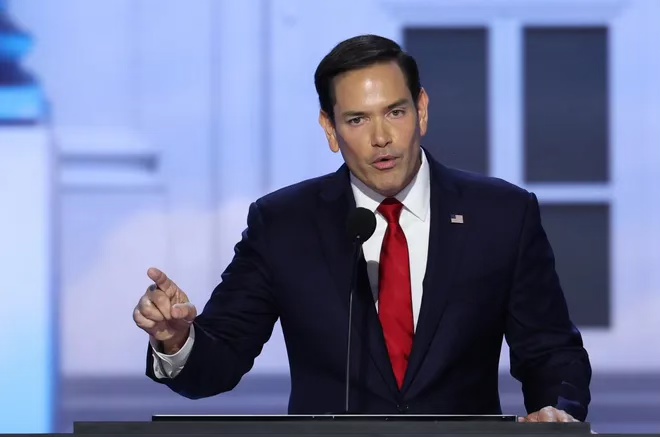
One of the things that really stood out was the overtly Christian language of many of the speakers. Marco Rubio (who I thought was brilliant as usual, he was my choice in 2016) spoke in eloquent tones of Corey Comperatore, who was killed by one of the sniper’s bullets aimed at President Trump last week. He not only spoke of his bravery; he described him as “…a man of God who loved Jesus fiercely.” I highly recommend viewing the short video clip.
Michael Morin, brother of Rachel Morin who was killed by an illegal immigrant stated, “What has gotten us through this unthinkable loss is our faith in Jesus Christ.” He went on to make the incredible statement, “And as brutal as the murder of my sister was, I pray that her killer will find Jesus Christ.” He also quoted Romans 8:28, which states that ‘all things work together for those who love God.’ Ben Carson quoted Isaiah where ‘no weapon formed against you will prosper’ referencing Donald Trump’s deliverance from death. He went on to exhort with numerous other Biblical passages and encourage attendees to be ‘joyful warriors for Christ’ and that ‘when God is with us, no one can stand against us’, a familiar New Testament passage. If you were to close your eyes, you might think you were in an evangelical church.
The cynic might say they were just pandering to evangelical Christians, who make up a significant portion of the current Republican party. While that’s always a possibility, it’s hard to see that as the reality here. These were not bland references to God, or adding ‘God bless you’ or ‘God bless America’ to the end of a speech, which both parties do. These were accurate quotations from scripture, both Old and New Testament, in context, by people who seemed to exhibit working knowledge of their application in daily life.
Should we be concerned about separation of church and state?
The modern pagan looks at this and the room starts spinning. Religion has no place in politics, they declare. The Constitution calls for separation of church and state! Actually, most people now know the Constitution says no such thing. The phrase is not there. It came from Thomas Jefferson, in a letter assuring a Baptist organization that the government would not impose a state sponsored religion that would limit their freedoms of worship and expression, as was true in the Old World. This phrase was popularized by those who want to silence the Christian voice in the public square. Our founding fathers knew of no such separation. Quite the opposite, they recognized that the entire republic was dependent on the adoption of Christian ethics on a large scale. It was John Adams who wrote, “We have no government armed with power capable of contending with human passions unbridled by morality and religion… Our constitution was made only for a moral and religious people. It is wholly inadequate to the government of any other.”
Fifty years later, the famous French writer Alexis de Tocqueville, who studied American’s astonishing success, as outlined in Ben Carson’s speech, wrote, “Americans combine the notions of Christianity and of liberty so intimately in their minds, that it is impossible to make them conceive the one without the other.”[1]
The old conservative (Republican) vs. liberal (Democrat) political divisions were mainly along fiscal lines. Conservatives were about smaller government and the free market. Liberals mistrusted business and felt government should run every aspect of our economy. The first time I ever voted was for Jimmy Carter in 1976. I was a relatively new Christian, and Jimmy Carter was an outspoken born again candidate. In 1980 I voted against him for Ronald Reagan. I could see his economic policies were a disaster. As my faith matured, I began to see that socialism, which is an extension of liberal big government welfare, is a denial of the Biblical doctrines of economic freedom, personal responsibility, and the prosperity that comes from diligence. This was long before the social positions of the left became so morally reprehensible.
Now the modern conservative movement, politically, is both fiscally and socially conservative. Evangelicals really have no political home outside of the conservative movement, as the left has taken positions hostile to Christian morality on almost every front, beginning with abortion. Not only do Biblical Christians have no other political home, the conservative political movement draws its root value system from Christianity, as defined in scripture. Mainstream Catholics and Jews are a much more mixed case, as their root system is found in tradition and ethnicity. It is thus entirely consistent with this that political figures make frequent references to Biblical truths. It defines the faith and ethic by which they live and govern.
However, even some evangelical Christian leaders are confused about this mixture of Christianity and public policy. While understandably not wanting Christians to be confused about who the Messiah is, as pagans do, they may be over simplifying things. Someone’s morality is going to govern public policy.. Christian ethics can prevail in the public sphere without forcing ‘conversion’ to the faith. The scripture is very clear about how people fare when either the righteous or the wicked rule.
When the righteous are in authority, the people rejoice;
But when a wicked man rules, the people groan (Proverbs 29:2)
Not too long ago, journalists in the old school mainstream media would be hyperventilating over such overt Christian references from political figures. This was a dangerous mix of church and state, and threatened their secular paradise with a new theocracy, like a Christian version of Iran. However, as pagans have been in positions of influence and authority in government, media, and even big tech, the loss of assumed freedoms such as free speech and equal protection under the law has had a chilling effect on even unbelievers. It may be bringing a new openness to a revival of our Christian heritage and ethos. Equality, it turns out, is itself a Christian value, as I devote a whole chapter in my book in describing.
Our founders understood that the morality and ethics needed for freedom and prosperity came from our Christian heritage, and launched the greatest republic in human history as a result. We need constant reminders of our root system, or the tree will die.
[1] Modern Paganism, Chuck Warnock, p. 112.
Leave a Reply